
California almonds dominate global agriculture in a way few crops can match. The state’s almond orchards stretch across nearly one million acres of the Central Valley, and California farmers supply more than 80 percent of the world’s almond demand. Every year, growers, beekeepers, processors, and exporters work together to deliver this iconic nut to kitchens and factories in more than 100 countries. Understanding California almonds means understanding one of the most efficient, innovative, and economically powerful food systems on Earth.
Ancient Roots, Modern Power
Humans have eaten almonds for more than 10,000 years. Ancient Egyptians placed almonds inside royal tombs, including that of Pharaoh Tutankhamun. Ancient Greeks wove the almond into mythology, and Roman brides received showers of almonds as a fertility blessing. Arab traders carried almond cultivation across the Mediterranean, spreading it through Spain, Italy, and North Africa. That rich heritage eventually reached California when Spanish missionaries planted almond trees along the state’s famous mission trail beginning in 1769.
The mission-era plantings proved only modestly successful along the cool, foggy coast. Almonds truly needed the vast, sun-drenched Central Valley — and when gold rush settlers moved inland after 1850, they discovered that California’s interior offered growing conditions that rivaled anything Spain could produce. By the late nineteenth century, commercial orchards had taken root in the Sacramento Valley, and California’s almond industry had begun its extraordinary rise.
The Central Valley: Perfect Conditions
Geography and climate combine in the Central Valley to create near-perfect almond-growing conditions. The valley stretches 450 miles from Redding to Bakersfield, bounded by the Coast Ranges to the west and the Sierra Nevada to the east. The Sierra Nevada snowpack feeds a network of rivers, canals, and reservoirs that farmers rely on for summer irrigation. Without that reliable water supply, almond cultivation at this scale would be impossible.
The Mediterranean-style climate delivers exactly what almond trees demand: cool, wet winters that give the trees adequate chilling hours to break dormancy properly, warm springs that support pollination, and long, hot, dry summers that ripen the crop and allow hulls to split naturally before harvest. California’s Central Valley checks every box.
Almond growers concentrate their orchards in counties like Fresno, Kern, Tulare, Stanislaus, and Merced, planting trees in deep, well-drained sandy loam soils that allow root systems to penetrate 15 feet or more. The flat valley floor makes mechanized planting, pruning, and harvesting far more practical than in hillside regions, giving California growers a significant efficiency advantage over competitors in countries like Spain, Australia, and Iran.
Varieties That Drive the Industry
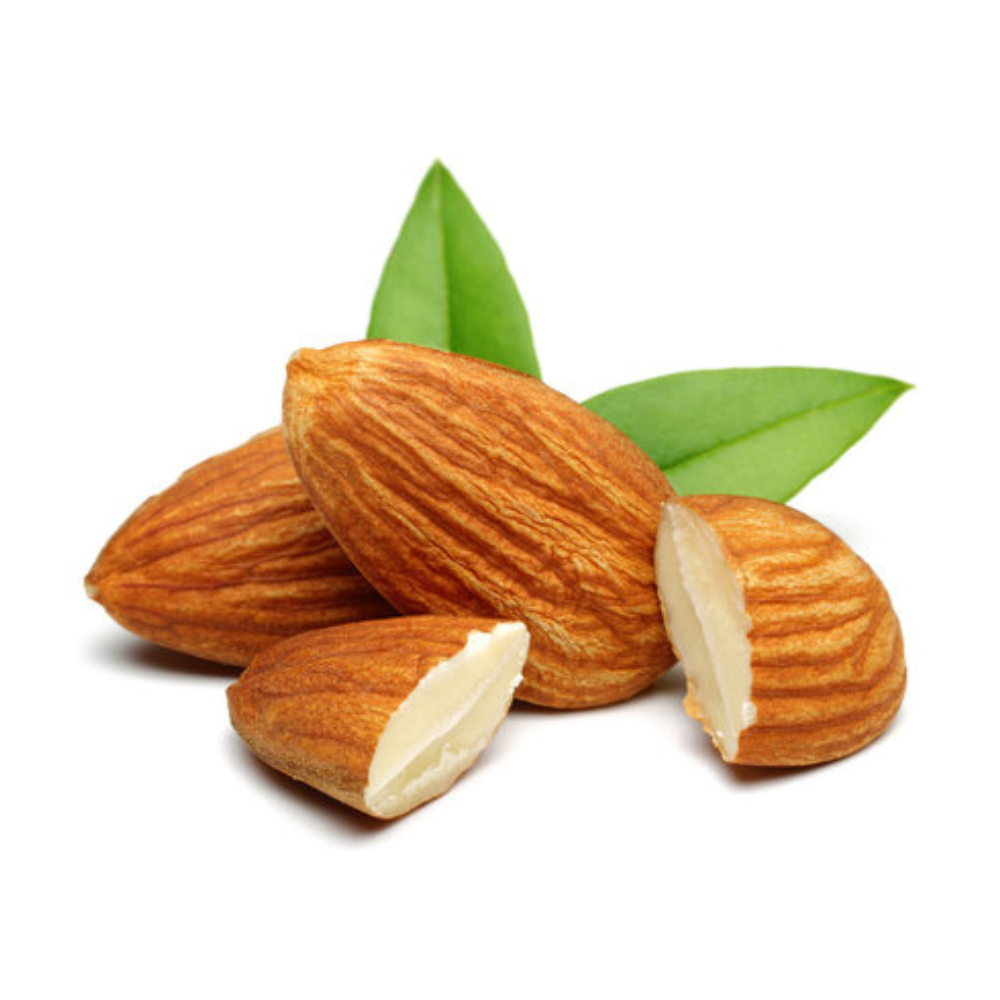
California growers cultivate dozens of almond varieties, but a few dominate commercial production. Nonpareil leads the pack. Researchers at the University of California developed it in the early twentieth century, and it remains the most widely planted variety in the state. Nonpareil produces a large, flat, smooth-skinned kernel that processors love for sliced almonds, slivered almonds, almond flour, and almond butter. Its mild, sweet flavor appeals to consumers worldwide.
Because Nonpareil cannot pollinate itself, growers plant pollinizer varieties — such as Carmel, Butte, and Padre — in adjacent rows to supply compatible pollen. Growers also increasingly plant Independence, a self-fertile variety that can set a full crop without a pollinizer. Independence reduces orchard management complexity and opens new planting options, making it one of the fastest-growing varieties in California today.
The Pollination Miracle
Every February, California almond orchards stage one of the most spectacular events in all of agriculture. The trees burst into bloom weeks before they leaf out, covering the Central Valley in a sea of white and pale pink blossoms. This beauty comes with urgent biological stakes: almond trees require cross-pollination from honeybees to set their crop, and the window for pollination lasts only a few weeks.
To meet this demand, the California almond industry mobilizes the largest managed pollination event on the planet. Beekeepers transport approximately 1.8 million honeybee colonies — nearly 70 percent of the entire U.S. commercial beehive population — into almond orchards each February. Truckers drive hives from Florida, Texas, North Dakota, and dozens of other states, timing their arrival to coincide with bloom. Growers typically place two colonies per acre to ensure adequate pollination.
This massive bee mobilization has made almond growers among the biggest financial supporters of the U.S. beekeeping industry, with growers paying more than $300 per hive for pollination services. It has also made almond growers deeply invested in bee health. The industry funds research into colony collapse disorder, pesticide safety protocols, and bee nutrition programs, recognizing that the almond crop’s future depends directly on honeybee population health.
Harvest: Shaking the Trees
California almond harvest runs from August through October, peaking in late August and September. The process begins when approximately 80 percent of hulls on a tree have split open — a signal that the kernels inside have reached full maturity. Growers call this moment “hull split,” and they monitor their orchards closely for it.
Mechanical tree shakers move through the orchard rows, gripping each tree trunk and vibrating it powerfully for a few seconds. This shaking dislodges almonds from the branches, sending them raining to the orchard floor. The almonds then dry on the ground for seven to ten days, after which sweeping machines gather them into windrows. Pick-up machines collect the windrows and separate almonds from sticks, leaves, and debris before filling trailers that transport the crop to the huller-sheller.
At the huller-sheller, machines remove the outer hull and hard shell, releasing the almond kernel inside. Processors then sort, grade, and package kernels for retail sale or further processing. California’s almond processing facilities operate some of the most sophisticated food safety and quality control systems in the world, meeting the rigorous standards required by buyers from Europe, Japan, the Middle East, and dozens of other markets.
Nutrition and Health Benefits
Almonds earn their reputation as a nutritional powerhouse. A one-ounce serving — about 23 almonds — delivers 6 grams of protein, 14 grams of mostly unsaturated fat, 3.5 grams of fiber, 76 milligrams of magnesium, and 7.27 milligrams of Vitamin E, making almonds one of the best food sources of this essential antioxidant nutrient.
Research consistently connects regular almond consumption to improved cardiovascular health. Studies show that eating almonds regularly reduces LDL (“bad”) cholesterol levels, improves blood lipid profiles, and lowers markers of inflammation. The high magnesium content supports healthy blood pressure and muscle function. The fiber and protein combination promotes satiety, helping people manage their appetite and body weight. Almonds also rank low on the glycemic index, making them a smart snack choice for people managing blood sugar levels.
Economic Impact and Global Trade
The California almond industry generates more than $6 billion in farm-gate value annually, making almonds the state’s most valuable agricultural export. The industry supports over 100,000 jobs across farming, processing, transportation, and related sectors. Almond exports flow to Germany, India, Spain, Japan, China, the United Arab Emirates, Italy, and scores of other countries, making almonds one of the most globally distributed American food products.
Almond demand has grown almost continuously for decades, driven by rising health consciousness among consumers, the explosive growth of plant-based eating, and the popularity of almond milk. In 2011, almond milk overtook soy milk as America’s best-selling plant-based milk — a milestone that created a massive new demand channel that continues to expand today. Almond butter, almond flour, almond-based yogurt, and almond-based cheese have further diversified the market and multiplied the ways that consumers incorporate almonds into their daily diets.
Looking Forward
California almond growers face real challenges — most urgently around water availability as drought and climate change reshape the hydrology of the American West. The industry has responded aggressively, investing in micro-drip irrigation systems, precision water management tools, soil moisture sensors, and drought-tolerant variety development. Growers who adopted drip irrigation report water savings of 20 to 30 percent compared to traditional flood irrigation methods.
The almond industry also works hard to reduce its environmental footprint beyond water. Growers compost almond hulls as livestock feed, chip almond shells for biomass energy, and return pruned wood to the soil. The California Almond Board has committed to an ambitious sustainability roadmap targeting reductions in water use, greenhouse gas emissions, and dust generation by 2025 and beyond.
California almonds have traveled an extraordinary journey — from ancient Middle Eastern hillsides to Spanish missions to the fertile heart of the American West. Today, they nourish billions of people, power a multibillion-dollar economy, and sit at the cutting edge of sustainable agriculture. The farmers, scientists, and workers who grow and process California almonds face a challenging future, but they bring to that challenge the same ingenuity and determination that built this remarkable industry in the first place.